Direct Mail Why Direct Mail beats AI noise in 2026
0 minute read
Let’s be honest: our digital lives are a bit of a mess.
If your inbox looks anything like mine, it’s a non-stop barrage of AI-generated "slop," LinkedIn pitches from people you don't know, and "urgent" emails that are clearly just bots testing the waters. We’ve reached peak "digital burnout," and it’s making us cynical. When everything on a screen can be faked in seconds with a clever prompt, we stop trusting what we see.
That’s exactly why Direct Mail is having a massive "I told you so" moment.
You can’t "bot" a letterbox
The biggest hurdle for digital marketing in 2026 is that it has become almost too easy. A bot can fire off ten thousand personalised emails for the price of a coffee. Modern audiences are incredibly savvy, they recognise that a digital "send" costs you next to nothing, which can often make the message itself feel like it’s worth just as much.
Physical mail is a different beast entirely. It requires what we call "Proof of Work." When a prospect holds a high-quality brochure or a well-crafted letter from you, they subconsciously recognise that you have put some skin in the game. You’ve invested in the design, the paper, the print, and the postage. In a world of cheap digital noise, that tangible effort translates to a simple, powerful message: "These people are a proper business, and they actually value my time."
It’s a lot harder to "spoof" a letter
We’ve all seen those terrifyingly realistic phishing emails that can fool even the most tech-literate professional. But have you ever seen a "phishing" brochure? Probably not. It is incredibly difficult and prohibitively expensive to fake a high-end physical mailing.
The texture of the card, the specific weight of the envelope, and the professional finish of the print act as a built-in security badge for your brand. It’s much harder to hide behind an algorithm when you’re delivering something physical. If a customer can hold it in their hands, it feels verified and legitimate in a way a pixel just can't match.
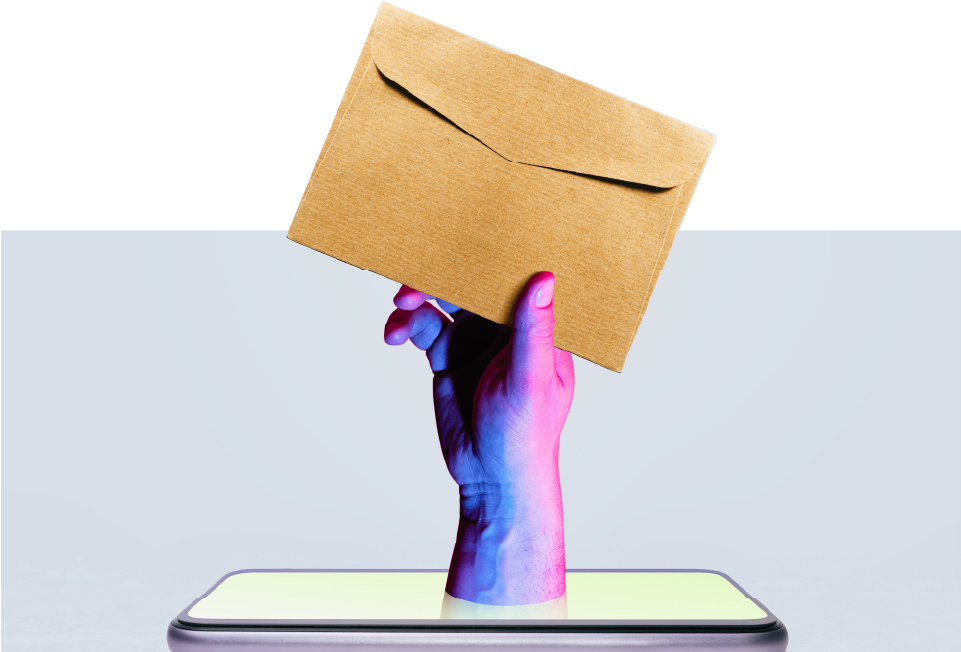
Cutting through the "AI Slop"
Algorithms are currently making the internet a bit of a lottery. They’re constantly guessing what we want to see, and quite often, they’re failing. Direct mail doesn't care about "engagement metrics," "shadow banning," or the latest SEO update. It bypasses the screen and the filters entirely, landing directly on a desk or a kitchen counter.
It remains one of the only marketing channels that doesn’t require a login, a password, or an "I am not a robot" test to be seen. It’s a direct, unmediated line between your business and your customer.
It stays in the room
The lifespan of a digital ad is measured in milliseconds. An email is usually gone the second someone swipes left or hits delete. However, a physical piece of mail has a remarkable shelf life; it typically stays in a house or office for over a week.
It gets picked up, moved to the "to-do" pile, and seen by multiple people in the office or household. That is "dwell time" you simply cannot buy on a search engine. It’s the difference between a fleeting notification and a permanent presence in your prospect’s environment.
The Bottom Line
If you want to prove you’re a real, trustworthy business that actually wants someone’s custom, it might be time to stop sending more emails. In an era of AI-generated noise, send something they can actually feel.
Want to chat about making your next campaign a bit more "real"? Give a Flow team a shout today.

